
The New UK Physical Activity Guidelines Reinforce Something We’ve Known for Years
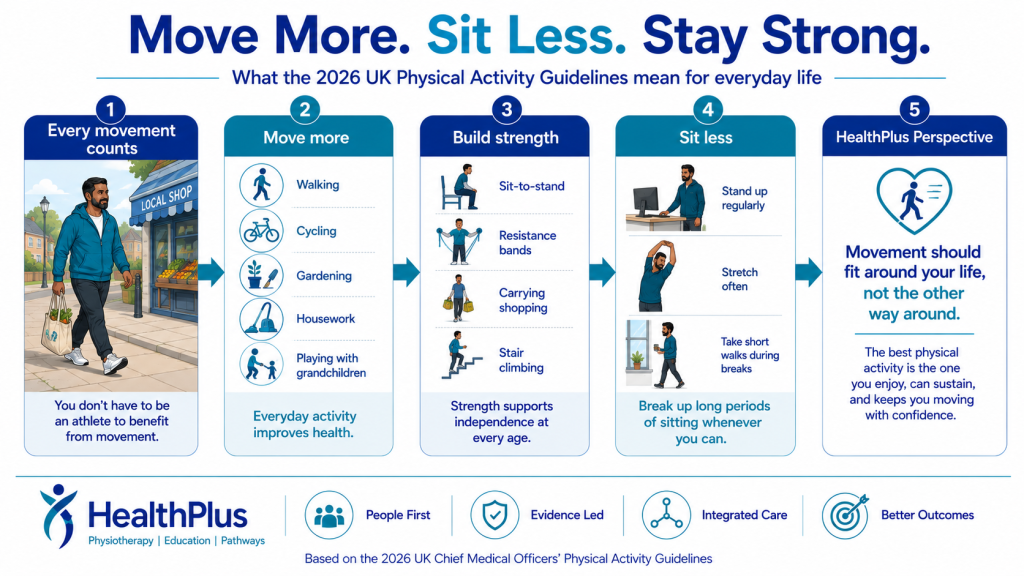
Why movement should be part of everyday life, not just exercise
Most people know they should be more active. They’ve heard the advice about 150 minutes of activity each week. They know exercise is “good for them”. The challenge has never really been knowing what to do. It’s knowing how to make movement part of everyday life.
That’s why the updated UK Chief Medical Officers’ Physical Activity Guidelines are so encouraging. Rather than introducing dramatic new recommendations, they reinforce something many clinicians have been saying for years.
Every movement counts. Whether it’s walking to the shops, climbing the stairs, gardening, playing with grandchildren or returning to a favourite hobby, moving more and sitting less can have a meaningful impact on health. For many people, that’s a much more realistic starting point than trying to achieve the perfect exercise programme.
Moving is better than waiting
One of the strongest messages from the updated guidance is that some physical activity is always better than none. You don’t have to become a runner or spend hours in the gym to benefit.
Small increases in daily movement can improve cardiovascular health, reduce the risk of long-term conditions, support mental wellbeing and help people maintain their independence as they get older. Perhaps more importantly, they often help people regain confidence in what their body can do.
Strength matters too
The updated guidance also places greater emphasis on muscle strengthening activities. This is particularly important as we age. Strength isn’t simply about fitness. It’s what allows people to get up from a chair, carry shopping, climb stairs and remain independent.
The guidance also highlights the importance of preserving muscle strength for people using GLP-1 weight management medications, recognising that maintaining muscle is an important part of healthy weight loss.
Sitting less is part of the solution
Many of us spend long periods sitting at work, travelling or relaxing at home. Even people who meet the recommended activity targets can benefit from breaking up prolonged sitting with regular movement throughout the day.
Sometimes standing up, walking for a few minutes or stretching between meetings can be just as important as the planned exercise session later that evening.
What this means for musculoskeletal health
From an MSK perspective, the guidance reinforces an important principle. Movement isn’t simply something we prescribe after injury. It’s one of the foundations of good health.
Regular physical activity helps maintain joint mobility, muscle strength, balance and overall function. It can also reduce the risk of falls, improve recovery from many musculoskeletal conditions and support long-term independence.
For people living with persistent pain, staying active often feels counterintuitive. Yet with the right advice and support, movement is frequently part of the solution rather than something to avoid.
A different way of thinking
Perhaps the biggest message isn’t about exercise at all. It’s about helping people build movement back into everyday life. That doesn’t always require expensive equipment or structured programmes.
It might be walking to the local shop instead of driving. Taking the stairs. Getting back into gardening. Walking with friends. Playing with children or grandchildren. The best activity is often the one people enjoy and can continue doing.
From a HealthPlus Perspective
The updated UK Physical Activity Guidelines reinforce something we see every day in clinical practice. Health improves when movement becomes part of everyday life, not just something people try to fit into a busy week.
Whether someone is recovering from injury, managing arthritis or simply trying to stay healthy as they get older, sustainable movement usually has a greater impact than short bursts of motivation.
As clinicians, our role isn’t simply to prescribe exercise. It’s to help people find practical, realistic ways to move with confidence and keep moving for the long term. That is where lasting change begins.
References
- UK Chief Medical Officers. Physical Activity Guidelines. Department of Health and Social Care. 2026.
- World Health Organization. Guidelines on Physical Activity and Sedentary Behaviour. Geneva: WHO; 2020.
- Bull FC, et al. World Health Organization 2020 Guidelines on Physical Activity and Sedentary Behaviour. Br J Sports Med. 2020;54:1451-1462.
About the Author
Nihar Palan is an Advanced Practice Physiotherapist with nearly two decades of experience in musculoskeletal healthcare. Through HealthPlus, he works with Primary Care Networks and healthcare organisations to improve MSK pathways while helping people better understand movement, rehabilitation and healthy ageing through evidence-based education.
Disclaimer
This article is intended for education and general awareness only and should not be considered individual medical advice. Physical activity recommendations should always be considered alongside your personal health, medical history and current circumstances. If you have persistent pain, a long-term health condition or concerns about starting or increasing physical activity, seek advice from your GP or an appropriately qualified healthcare professional.
