
What a Good MSK Pathway Actually Looks Like
Spend enough time working in musculoskeletal care and you start to notice a pattern.
Most of the challenges we talk about aren’t really about a lack of clinical expertise. The expertise already exists. We have skilled GPs, experienced physiotherapists, advanced practitioners, orthopaedic specialists, community teams, and voluntary sector organisations all trying to help the same population. Yet patients still describe journeys that feel fragmented, confusing, and unnecessarily slow.
A patient develops back pain and doesn’t know where to turn. Another waits weeks for an appointment while becoming increasingly worried about what their symptoms mean. Someone else receives multiple assessments but never feels they have a clear plan.
These experiences are rarely caused by a lack of effort from individual clinicians. More often, they reflect how the system has evolved over time. New services have been added, referral routes have grown, and pathways have become increasingly complex. What makes sense organisationally does not always feel simple from the patient’s perspective.
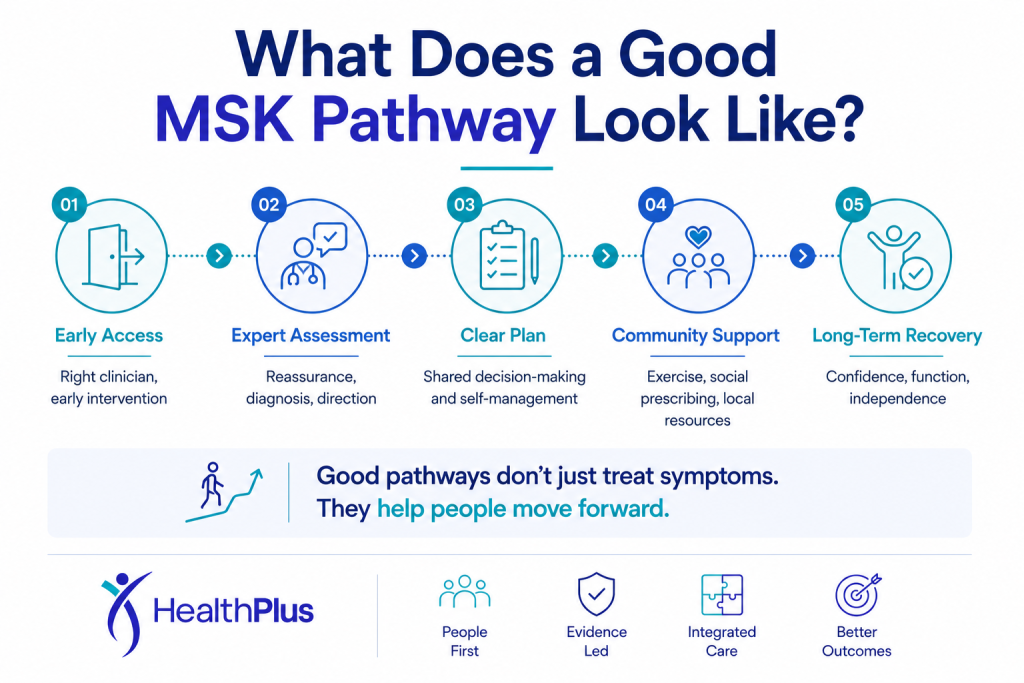
That raises an important question. What should a good MSK pathway actually look like?
For me, it starts with early access to the right clinician. Not necessarily the quickest appointment available, but the clinician best placed to assess the problem, provide reassurance where appropriate, identify red flags, and help the patient understand what happens next.
That early direction matters more than we sometimes realise. It can prevent unnecessary investigations, reduce anxiety, improve confidence, and help people begin recovery sooner.
But access alone is not enough. A good pathway should feel connected. Information should flow between professionals. Clinicians should understand each other’s roles. Patients should not feel as though they are being passed from service to service in search of answers.
Primary care has a central role in making this happen. It is often the front door to the healthcare system and remains one of the most trusted parts of it. When primary care teams have access to well-integrated MSK expertise, decisions can be made earlier and patients can be directed more effectively.
The pathway shouldn’t stop there. Recovery happens in real life, not just in clinics. Community exercise programmes, walking groups, leisure services, social prescribing networks, and voluntary organisations all have a role to play. For many people, these resources become the bridge between treatment and long-term self-management.
This is where I think the future direction of MSK care sits. Less fragmentation. Earlier intervention. Stronger integration between healthcare and community support.
Pathways that focus not only on managing symptoms, but also on helping people stay active, independent, and connected to the things that matter to them.
None of this is particularly revolutionary. In many ways, it’s common sense. Yet creating that experience consistently across a system remains one of the biggest opportunities facing healthcare today.
From a HealthPlus perspective, the goal has never simply been to deliver appointments. It’s to help build pathways that feel clearer for patients, more sustainable for primary care, and better connected to the communities they serve.
Because ultimately, a good MSK pathway shouldn’t feel complicated. It should simply help people get the right help, at the right time, and support them to move forward with confidence.
